Sunday, December 26, 2010

Interview #1--Danny Gregory


Danny Gregory has been an inspiration to many of us, from the time his first journaling book, Everyday Matters, first appeared on the scene. It was followed by The Creative License; Giving Yourself Permission to Be The Artist You Truly Are (which I am currently re-reading with delight!) and then a group effort, An Illustrated Life: Drawing Inspiration from the Private Sketchbooks of Artists, Illustrators and Designers, in which I was honored to be included.
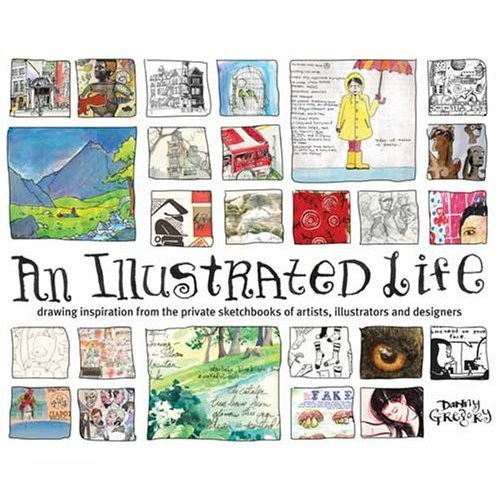
These are only a few of Danny's no-nonsense, get-it-done books, and tens of thousands of us reap the benefits.


No stranger to personal tragedy, New York resident Gregory has turned to journaling again and again to cope with--and celebrate--life.  He fearlessly invites us along for the journey and shows us ways to deal with our OWN ups and downs.  More importantly, he proves that every day--every single day--really does matter.

Danny, thank you for all you've done, including being part of the book and the blog.

So to the interview!
-----------------------

Q. First off, a tough one.  You started journaling in response to a tragedy in your life.  Do you feel up to sharing what it meant to you, and means now that life has handed you another one?  (If this one isn’t comfortable, not to worry; I used one of your pieces of art from the recent adjustment and your notes really do speak for themselves.)

A. I start writing and drawing in my journal less than a week after Patti's death.  It was the only confidante and sounding board I had, a refuge that had always given me a way to gain perspective and insight. I find that continuing to record and paint my life and its changes has been key to dealing with my grief. And it kept me in touch with Patti; I had always shared the pages of my journal with her and somehow continuing to fill them kept me connected. 


Q. You started an incredible groundswell movement with your books.  How do you feel about that?  You’re an icon for a lot of people; it’s got to be humbling, and sometimes even perhaps a bit of a burden.  Do you feel that you’re still sketching for yourself, or for others?  Is this good, or bad?

A. I am always surprised when people give me any sort of credit for the growing interest in illustrated journaling.  Certainly I have written about journaling and shared my own pages but I don't feel responsible for or even terribly connected to the people who have taken up their own sketchbooks. I certainly don't feel like an icon and remain somewhat embarrassed by my drawings. I have however felt pressure from keeping a blog over the years.  There are times when it is terrifically inspiring to me to share my work and thoughts, and it keeps me going even if I am out of ideas or new directions. However at other times I can feel a nagging sense that I must post,must share and that oppressive obligation has occasionally driven me to take a hiatus from online life and retreat into my own world. I can also feel like I am over-sharing and get self-conscious and shy.    

Q. You've drawn a lot of dogs, and even have published a whole book on them (which I love, by the way.) Why dogs?  I LOVE your dog sketches, and your book on bad dogs.  You’ve got a special feeling for the subject, it’s obvious. 

A. Dogs have always been very important to me. When i was a child I fantasized about being a vet. I have always owned dogs and drawn them since I was able to hold a crayon. 

Dogs make great models. They will hold still for ages, have great personalities, don't mind posing nude, and work for snacks. They allow me to draw bones, muscles and fur, and come in so many shapes, colors and sizes.  

Oh and my initials are D. O. G.   

(You can find Danny's dog book, Bad to the Bone, HERE.)

Q. What’s your favorite medium?  Looks like you’re mostly using dip pens and ink now…with watercolor?  Advice?

 A. I have become fairly committed to dip pens and India ink. I use sum-I ink for tone but recently have become devoted to Dr. pH Martins liquid watercolors.  


Q. I understand you’re doing some teaching, now.  How do you like the in-person stuff?

A. I rarely teach. Partly that's because most places don't really get what I want to teach or how. I also find that I have never been able to teach in an appropriate environment. Teaching illustrated journaling in a sterile academic classroom feels stilted and cold. 

That being said I have always loved my students. It is so great to see people get hooked on drawing and start compulsively documenting their lives. If I can share my enthusiasm for journaling, my life has been worthwhile.


--------------


And it certainly has.  Thank you, Danny...


See Danny's website here: http://dannygregory.com/
and his blog here: http://dannygregory.wordpress.com/

Saturday, December 25, 2010

Owls in the night

You need:

  1. blue construction paper 15 by 20 cm
  2. white tempera paint
  3. piece of cardboard
  4. brush
  5. saucer
  6. paper towel
  7. fine black marker
  8. yellow pencil


Draw a moon and colour it with yellow pencil. Paint the bottom of the blue sheet white with tempera paint.


Put a paper towel on a saucer. Put a stripe of white tempera paint on the towel. The paper towel will function as a stamp pad. Dip the edge of a piece of cardboard into the white paint and print a trunk. Drag the cardboard a bit to create a thicker trunk. Print several branches. Be sure to leave some space between the branches for the owls.


Use a fingertop and white paint to print the body of the owls. Leave the work to dry.


Draw eyes with a yellow pencil. Outline the eyes with a fine black marker. Draw details like feathers, beak and legs.


Print snow flakes using a q-tip or the end of a brush.

Friday, December 24, 2010

Blog co-authors!

We're up to 22 co-authors for this blog, from the wonderful artists who took part in the book, with a few more we hope will be able to join us--if you've clicked the links next to their names in the Book Artists list at right, you know there is a lot to look forward to!

We'll be posting interviews with all of them, starting, as noted, the day after Christmas with Danny Gregory. 

As time goes by, these co-authors will chime in with new insights, posts, and images.  I can't wait!

Some of the names in the blog co-authors list aren't entirely self-explanatory, but fun!  Veteran journal-keeper and all 'round inspiration Roz Stendahl, for instance, shows up there as "journalrat," and one of my earliest online inspirations, Spanish artist Enrique Flores, is 4ojos, whom you may have seen by that name on YouTube.  My dear friend Laura Frankstone's blog is Laurelines, and that's what you'll see in the co-author's list. 

We invite you to explore, bookmark these sites, and watch for the insights on journal-keeping you'll find here in future weeks and months!

And a most Merry Christmas and wonderful holidays to you all!

Sunday, December 19, 2010

Upcoming December 26--an interview with Danny Gregory

DO watch for it--as I said, there wasn't room in the book for all the wonderful interviews with 27 artists--it would have become encyclopedic!  So,I'll share them and expand on them here. 

I was able to use much more of Danny's work, plus links to his books, blogs, website and more.  It's fascinating...


The Artist's Network will also feature some of these interviews--4-5, I think--so most of this resource will be available ONLY here.  You'll love it!

Saturday, December 18, 2010

Penguins and polar bears

Made by Jorine, grade 6

You need:

  1. white drawing sheet A4 size
  2. plastic wrap
  3. watercolour paint
  4. brush
  5. jar with water
  6. black waterproof marker
  7. white tempera paint
  8. orange marker
  9. glue
  10. coloured cardboard
  11. white pencil

Paint a part of the sheet with blue water paint. Use lots of water. While the paint is still wet, push plastic wrap on it to create floes and then leave the sheet to dry. Remove the wrap.

Use a waterproof black marker to draw several penguins. Colour the black parts and draw wings. Use white tempera to paint the bellies. Leave the work to dry and draw eyes and beaks.

Draw a polar bear on the ice. Trace the pencil lines with a fine black waterproof marker. Paint the bear with white tempera paint, including the black lines to make them a bit hazy.
Paint the background with a mixture of white tempera and a little blue. In the example the mix is made of white tempera and the blue rinse water of the water paint.

Paste the work on a coloured background and draw ice crystals along the edges with a white pencil.

Friday, December 17, 2010

Come on, let's make a snowman!

You need:
  1. blue construction paper A4 size
  2. oil pastels
  3. pencil
  4. white tempera
  5. brush

Students sketch a part of a snowman on blue paper. Sketch the hat and scarf and other items too. By choosing an incomplete snowman, students are forced to draw big. An additional advantage is that there remains some to imagine, because wwhat would your snowman look like if he filled the complete sheet?

Tell students that they begin to colour with white. This is to prevent the other colors will mix with white, and to be sure the white crayons will remain white! When the artwork is ready, outline everything with black oil pastel. Paint snowflakes around the snowman with white tempera paint and a sturdy brush.

Made by students of 10-11 years old

Tuesday, December 14, 2010

A new book from North Light...Artist's Journal Workshop

I've been filling illustrated journals for 40 years or so..."illuminated journals," as my friend Hannah Hinchman calls them, as so they are.  As an artist and writer, I enlist both sides of my brain to pay attention to my life, to work out problems, to celebrate the passing moments, to encourage creativity, to learn about nature...to love.

I've written on the subject in many magazines, from Sports Afield to Country Living, from Personal Journaling to The Artist's Magazine, over the years.

Last year, I decided the time was right to share my passion for journaling again, and offered a new online class.  The response--and the level of commitment and enthusiasm among the students--was astounding.  It was the best and most exhausting class I've ever taught, a whole different animal from covering techniques and materials.  Keeping an artist's journal touches something primal, something deep inside...and these wonderful students obviously felt it.

Shortly after, I turned the class material into a CD, for those who weren't able to take the class...as intensive as my classes are, I can only teach 1-2 a year.  (You can see the link at right.)  And then...as I tend to do, I approached North Light Books, my longtime publisher.  Again, the enthusiasm was immediate.  I signed a contract in January of 2010 and began contacting some of the best artist/journalists I know.  This subject is far too important to be the work of one person...

So in the book you'll see some very familiar names, and some who deserve to be moreso.  There are sketchers, writers, and some who do complete paintings in their journal sketchbooks.  Some write as much as they sketch, some barely use words at all.  Some plan more formal paintings, some simply explore this moment in time.  Some explore family history, some learn about nature, some are spiritual, some are everyday...and all are inspiring. There is joy and delight and challenge there, and even pain.

The journal gives us an immediate and invaluable tool to deal with life's ups and downs--both deserve our attention.

Sooo...my new North Light book will be out in June of 2011, and I've had a marvelous time with this one...my editor, Holly Davis, absolutely GETS it.  (The title now is Artist's Journal Workshop; Creating Your Life in Words and Pictures.)  Holly and I worked together very well, with lots of give and take, and her suggestions and questions have made it a better book by far.  She was a blast to work with.

So were the 26 terrific artists that shared their work and words.  I found a wide range of some of the very best artist journal keepers out there, from Hannah Hinchman to Danny Gregory, from Laura Frankstone to Enrique Flores...you can see most of them listed in the sidebar at right, though I still need to add those who don't have websites or blogs yet.

I interviewed all of them, and we mined the interviews for quotes to explain and expand on the concepts in keeping an artist's journal. 

But there was FAR too much wonderful material to fit in the 144 pages of the book, so I started this blog just for these in-depth interviews and additional art.  There was too much of that to fit in the book too, and it needs to be seen and shared.

That was the beginning concept...

Again, it will grow beyond these boundaries.  Journaling is organic; it goes where it will.  There will be ongoing tips on journal keeping, recommended books, art, links to favorite books or websites, and much, more more, from me and from others involved in the project. 

We don't have the official book cover yet, just a working cover--a place marker, if you will, but it'll be along soon...hence the mystery cover in the banner above!  (I don't design the covers or pick the titles of my own books, something that always amazes my readers and students!)  I'm as anxious to see what the final cover is as anyone.

I'm looking forward to seeing where this journey takes us, as well...I hope it encourages you, the reader, to take up that journal book and begin your OWN journey...

So welcome aboard, and I hope you enjoy the interviews, journal pages, tips and hints...